Custom RF Coaxial Cable Assemblies
High-performance RF coaxial cable solutions for industrial automation, medical devices, wireless communication, automotive electronics, test and measurement, aerospace, IoT, GPS, and embedded electronic systems.
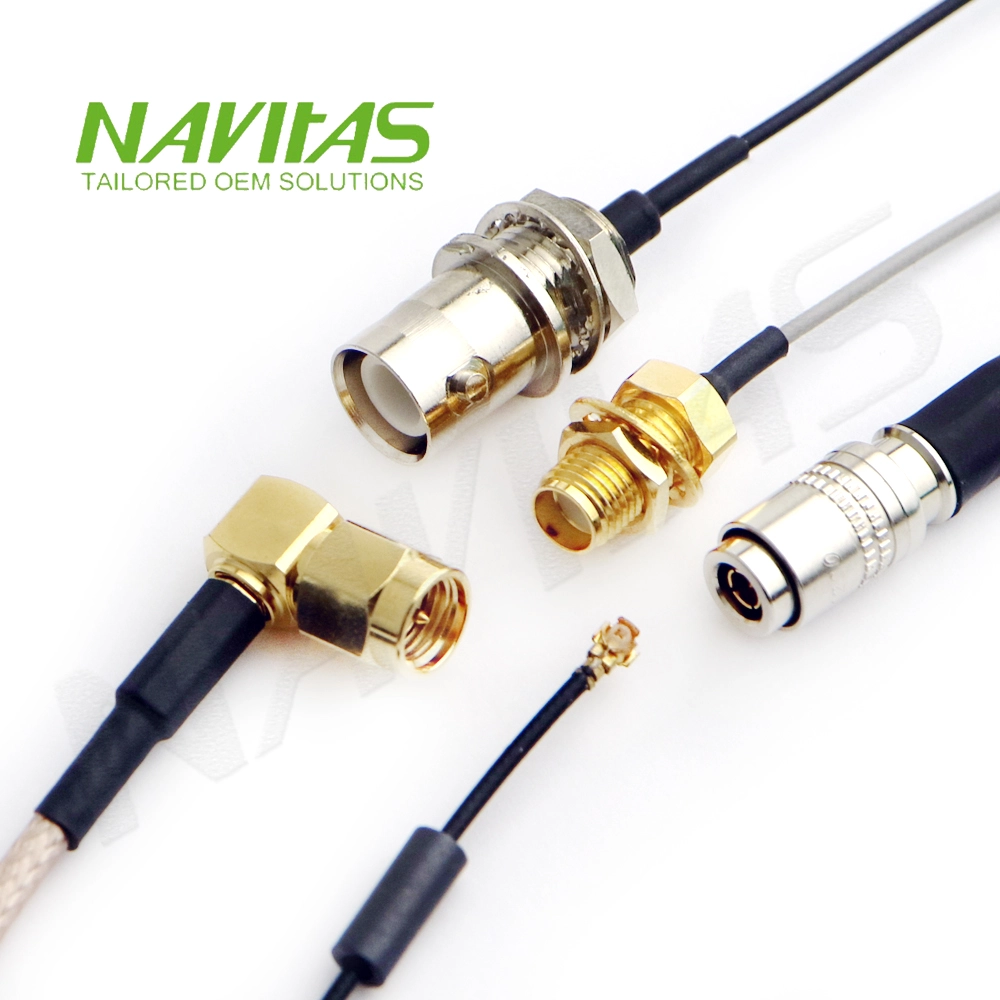
RF Coaxial Cable Engineering Center
RF coaxial cable assemblies are designed to transmit high-frequency electrical signals with stable impedance, shielding performance, and mechanical reliability. A typical coaxial cable includes a center conductor, dielectric insulation, shielding layer, and outer jacket. This structure helps reduce signal loss, electromagnetic interference, and unwanted signal radiation.
Unlike general wire harnesses, RF cable assemblies must be designed with signal integrity in mind. Connector type, cable construction, impedance, cable length, shielding coverage, bend radius, and assembly process can all influence insertion loss, return loss, VSWR, and transmission quality.
NAVITAS provides custom RF coaxial cable assemblies for OEM and ODM projects. We support connector selection, cable recommendation, prototype development, small-batch production, and mass production for international B2B customers.
Why Choose NAVITAS for RF Cable Assemblies?
Engineering Support
We assist with connector selection, cable selection, shielding design, mechanical review, and manufacturability evaluation.
OEM / ODM Service
Customized cable length, connector configuration, overmold structure, labeling, packaging, and production requirements are available.
Taiwan Manufacturing
NAVITAS provides stable production management, international B2B communication, and quality-focused manufacturing support.
Prototype to Production
From design review to sample approval and batch production, our process helps reduce engineering risk and improve project efficiency.
RF Connector Families
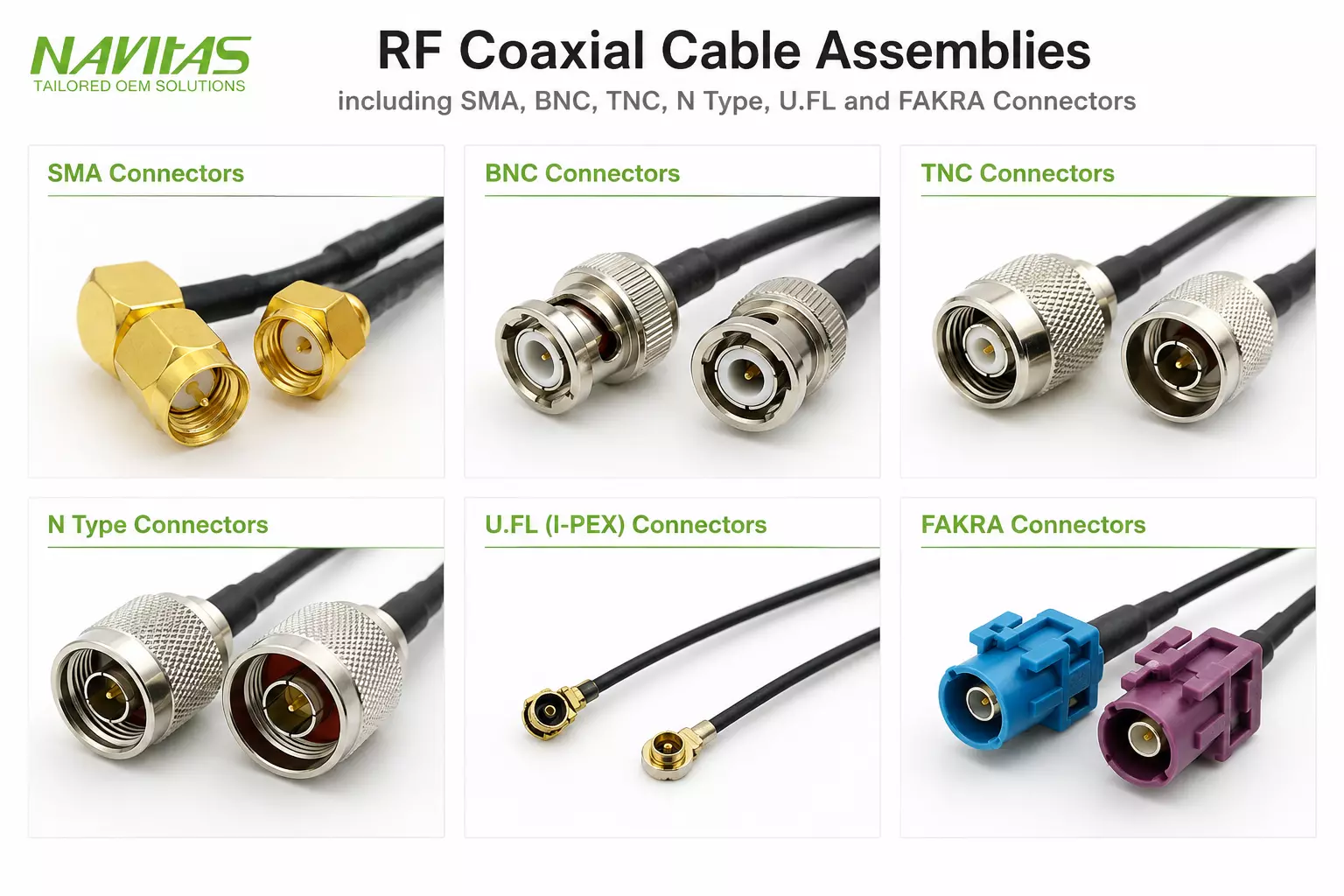
Selecting the right RF connector is one of the most important steps in cable assembly design. Different connectors are suitable for different frequency ranges, space limitations, locking methods, vibration conditions, and application environments.
SMA Cable Assembly
SMA connectors are widely used in RF testing, antennas, GPS, Wi-Fi, wireless communication, and high-frequency 50-ohm RF systems.
View SMA Cable AssemblyBNC Cable Assembly
BNC connectors use a bayonet locking structure and are common in test equipment, broadcast systems, CCTV, and measurement applications.
View BNC Cable AssemblyTNC Cable Assembly
TNC connectors are threaded RF connectors that offer better vibration resistance and secure connection for rugged or outdoor applications.
View TNC Cable AssemblyN Type Cable Assembly
N Type connectors are used in antenna systems, base stations, RF infrastructure, wireless systems, and robust mechanical applications.
View N Type Cable AssemblyU.FL / I-PEX Cable Assembly
U.FL, I-PEX, and MHF micro coaxial connectors are used in IoT devices, Wi-Fi modules, Bluetooth modules, and embedded antennas.
View U.FL Cable AssemblyFAKRA Cable Assembly
FAKRA RF cable assemblies are commonly used in automotive GPS, ADAS, infotainment, telematics, antenna and vehicle communication systems.
View RF Cable FamilySMA RF Cable Assemblies
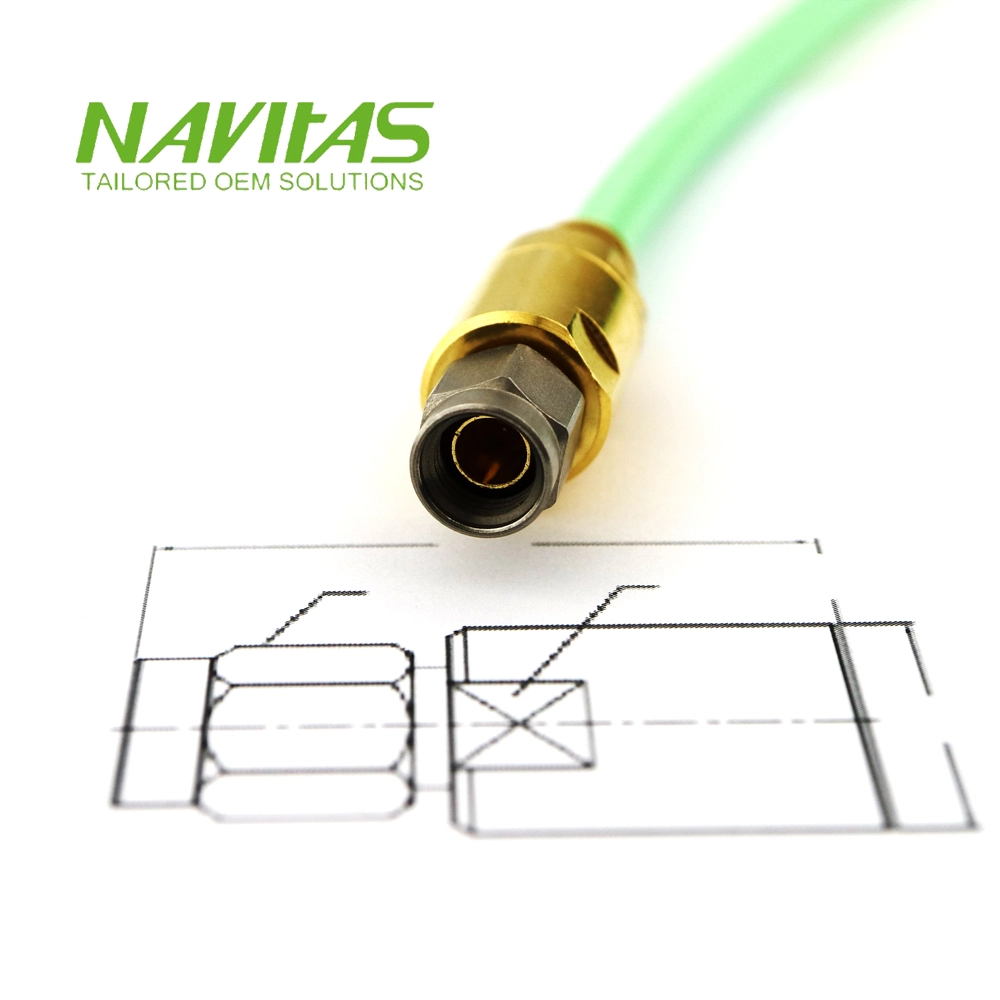
SMA cable assemblies are among the most widely used RF coaxial cable solutions for compact high-frequency systems. They are commonly selected for antennas, RF modules, wireless devices, GPS systems, testing instruments and embedded communication equipment. NAVITAS supports custom SMA connector combinations, cable length, cable type, heat shrink, overmold, labeling and packaging according to project requirements.
RF Connector Comparison Table
| Connector | Locking Style | Typical Use | Best For |
|---|---|---|---|
| SMA | Threaded | RF testing, antennas, wireless devices | Compact high-frequency RF applications |
| BNC | Bayonet | Test equipment, CCTV, broadcast | Quick connection and disconnection |
| TNC | Threaded | Industrial, outdoor, rugged RF systems | Vibration resistance and secure connection |
| N Type | Threaded | Antenna, base station, RF infrastructure | Robust mechanical strength |
| MCX / MMCX | Snap-on | Medical, GPS, compact RF modules | Miniature internal RF connections |
| U.FL / I-PEX | Snap-on | IoT, Wi-Fi, Bluetooth, embedded modules | Ultra-compact device design |
| FAKRA | Automotive locking | GPS, ADAS, infotainment, telematics | Automotive RF communication systems |
RF Coaxial Cable Types
Different coaxial cables provide different levels of flexibility, attenuation, shielding, temperature resistance, and impedance stability. NAVITAS helps customers select suitable cable types based on application, signal frequency, routing space, mechanical movement, and cost requirements.
| Cable Type | Typical Impedance | Key Features | Typical Applications |
|---|---|---|---|
| RG174 | 50Ω | Small diameter, flexible, cost-effective | GPS, IoT, wireless modules, compact devices |
| RG178 | 50Ω | Miniature size, PTFE insulation option, high flexibility | Medical equipment, compact instruments, internal RF wiring |
| RG179 | 75Ω | Small 75-ohm coaxial cable for video and signal transmission | Video systems, broadcast equipment, imaging devices |
| RG316 | 50Ω | Good flexibility, high temperature resistance, stable RF performance | RF testing, wireless devices, antenna cable assemblies |
| RG400 | 50Ω | Low loss, high temperature resistance, double shielding | Aerospace, defense, RF test systems, high-reliability equipment |
| RG58 | 50Ω | Larger diameter, durable, general-purpose RF cable | Industrial equipment, antenna systems, communication devices |
Industrial RF Applications
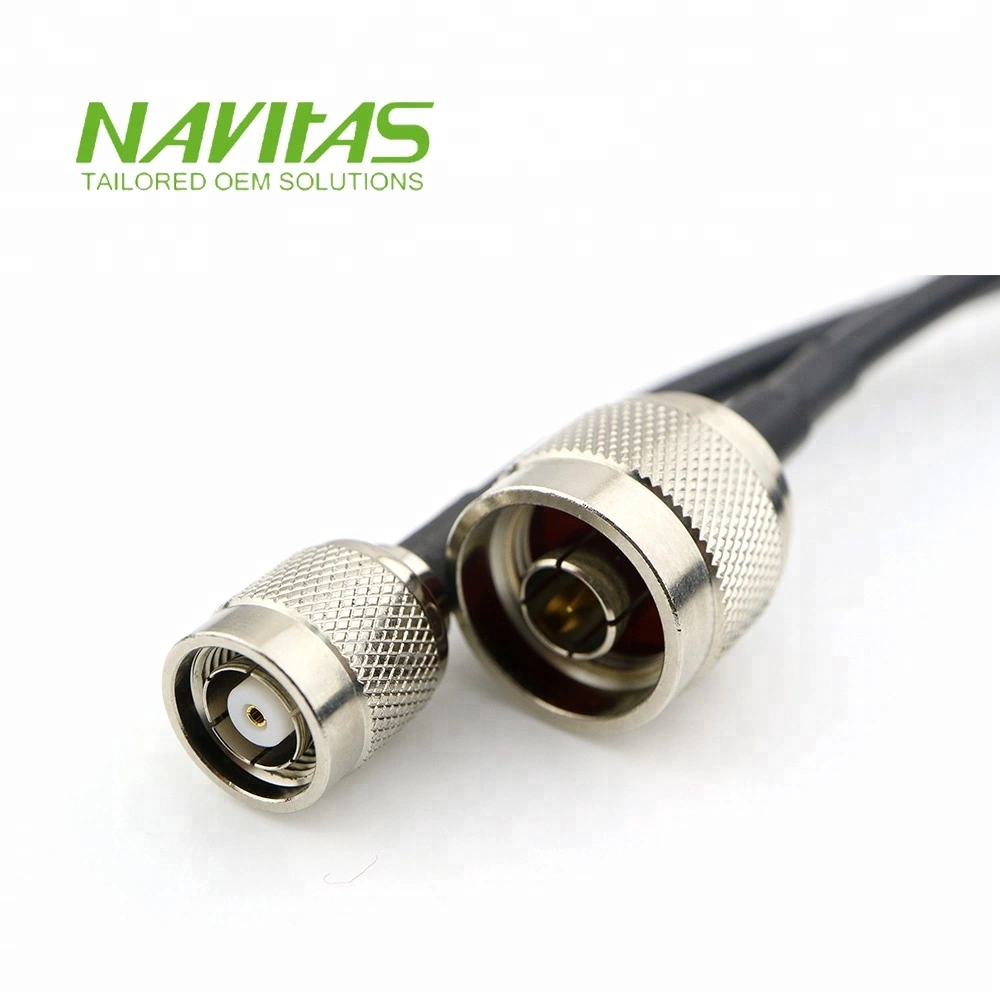
Industrial RF cable assemblies are used in wireless communication equipment, industrial gateways, antennas, RF modules, automation systems, monitoring devices and rugged electronic equipment. For industrial environments, connector strength, cable shielding, strain relief, routing space, vibration resistance and environmental protection must be reviewed carefully during the design stage.
Automotive RF Solutions
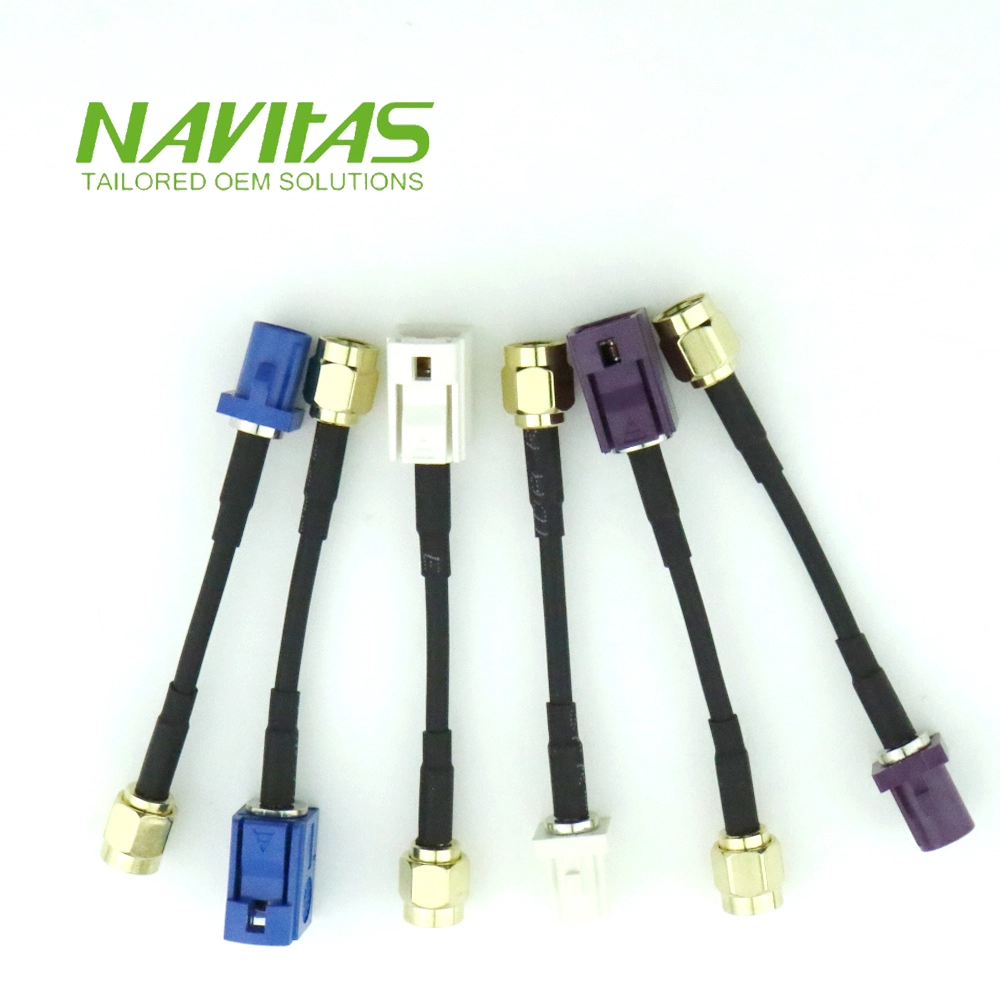
Automotive RF cable assemblies are used in GPS antennas, infotainment systems, telematics, ADAS modules, camera-related systems, vehicle communication modules and antenna connections. FAKRA connectors are widely adopted in automotive RF applications because they provide color-coded keying, secure locking and stable connection for vehicle environments.
RF Cable Assembly Manufacturing Capability
A reliable RF cable assembly requires both electrical performance and mechanical consistency. NAVITAS provides manufacturing support for cable cutting, stripping, soldering, crimping, connector assembly, heat shrink, overmolding, labeling, inspection and packaging.
Manufacturing Process
- Customer inquiry and application review
- Drawing, sample, or specification confirmation
- Connector and cable selection
- Prototype development
- Electrical and mechanical validation
- Customer sample approval
- Mass production
- Final inspection and packaging
Engineering & OEM Development
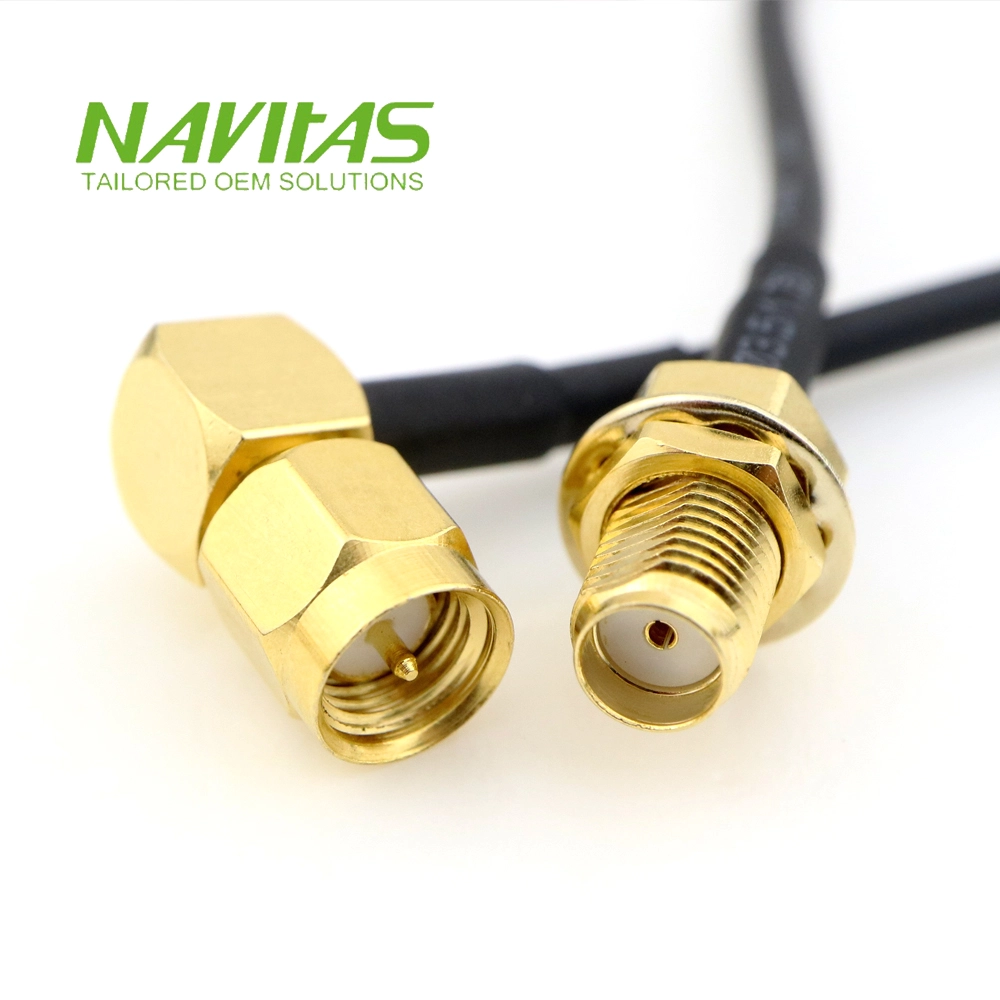
Many RF projects require more than a cable drawing. Engineers must consider frequency range, impedance, insertion loss, return loss, VSWR, shielding, cable routing, connector orientation, bend radius, temperature, vibration, moisture and installation space. NAVITAS supports customers with engineering review, connector recommendation, cable selection, sample development and manufacturability evaluation before mass production.
Connector Selection
Choose SMA, BNC, TNC, N Type, MCX, MMCX, U.FL, I-PEX, FAKRA or other RF connector options.
Cable Recommendation
Select RG174, RG178, RG179, RG316, RG400, RG58, micro coaxial cable or semi-rigid cable.
Signal Integrity
Support design review for impedance control, shielding, cable length and routing.
DFM Review
Evaluate manufacturability, tooling, MOQ, lead time and production consistency.
Manufacturing Capability / Panel Mount Solutions
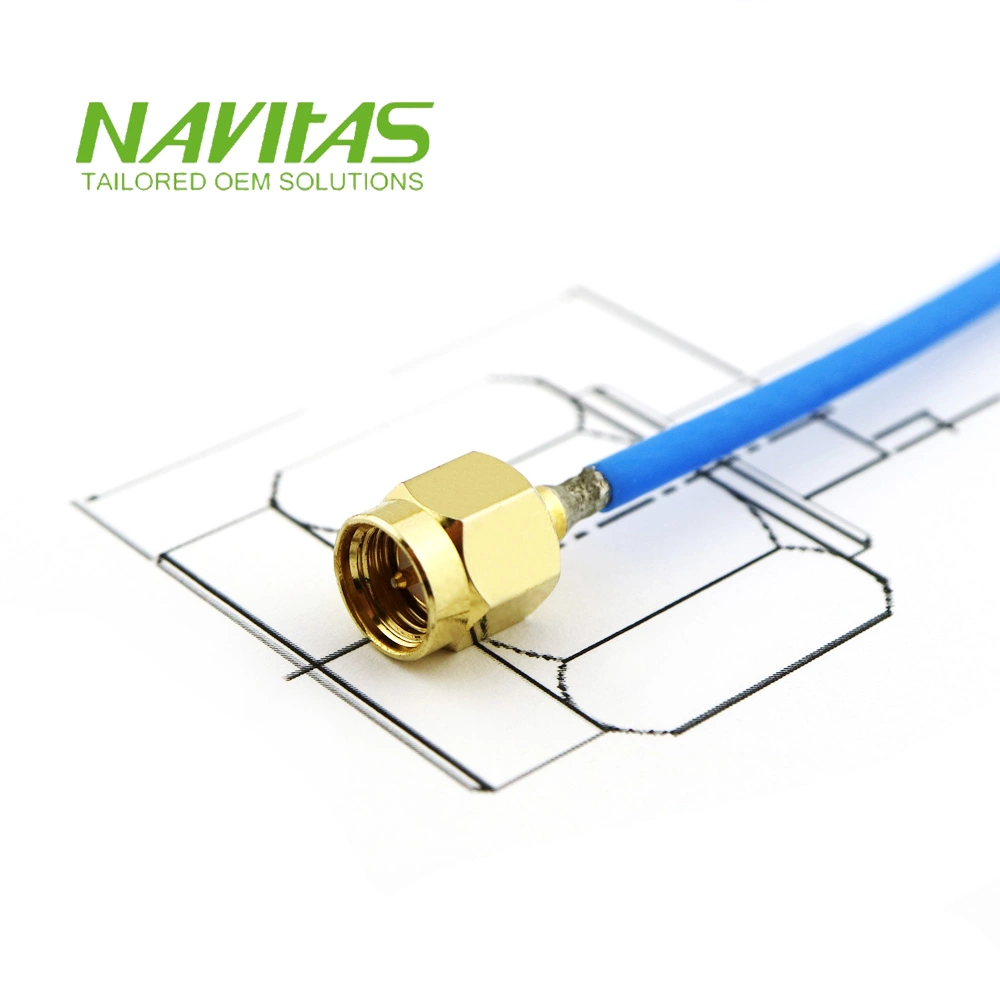
Panel mount and bulkhead RF cable assemblies are used when RF signals must pass through equipment enclosures, control panels, test fixtures, embedded systems or industrial devices. NAVITAS supports custom panel mount RF cable assemblies with connector orientation, cable length, mounting structure, heat shrink, labeling and packaging requirements.
RF Cable Assembly Selection Guide
The right RF cable assembly depends on electrical requirements, mechanical structure, environmental condition and production target. The following table provides general selection references.
| Application | Common Connector | Common Cable | Design Consideration |
|---|---|---|---|
| Wi-Fi / Wireless Module | RP SMA, U.FL, I-PEX | RG178, RG316, Micro Coax | Compact size, antenna connection, cable flexibility |
| GPS System | SMA, SMB, MCX, FAKRA | RG174, RG316 | Stable signal, small diameter, easy routing |
| Medical Device | MMCX, MCX, SMA | RG178, RG316, Micro Coax | Miniature size, reliability, flexible routing |
| Industrial Equipment | TNC, BNC, N Type | RG58, RG316, RG400 | Durability, vibration resistance, shielding |
| RF Test Equipment | SMA, N Type, BNC | RG316, RG400 | Repeatable performance, stable impedance, low loss |
50 Ohm vs 75 Ohm RF Cable Assemblies
Characteristic impedance is one of the most important parameters in RF cable assembly design. 50-ohm cable assemblies are widely used for RF communication, wireless devices, antennas, test equipment and industrial RF systems. 75-ohm cable assemblies are commonly used in video, broadcast, imaging and certain signal transmission applications.
Mixing 50-ohm and 75-ohm components in the same RF path may cause impedance mismatch, signal reflection, increased return loss and unstable performance.
RF Design Checklist
- Confirm the operating frequency range.
- Confirm 50Ω or 75Ω system impedance.
- Select the suitable connector type and gender.
- Select the suitable coaxial cable type.
- Define cable length and tolerance.
- Review bend radius and cable routing space.
- Confirm shielding and EMI requirements.
- Check operating temperature and environmental conditions.
- Decide whether overmolding, heat shrink, or strain relief is required.
- Confirm inspection, testing, labeling and packaging requirements.
RF Cable Assembly Design Tips
Minimize Cable Length
Longer cable length may increase attenuation. Keep RF routing as short as practical while meeting installation requirements.
Avoid Excessive Bending
Sharp bending can damage cable structure and affect RF performance. Follow the recommended bend radius of the selected cable.
Confirm Impedance Matching
Connector, cable and device interface should use the same impedance to reduce signal reflection and performance loss.
Consider Shielding Requirements
High-noise environments may require better shielding, proper grounding and careful cable routing to reduce EMI interference.
Common RF Cable Design Mistakes
- Mixing 50-ohm and 75-ohm connectors or cables without system review.
- Using excessive cable length, which may increase insertion loss.
- Choosing a connector that does not fit the required frequency or environment.
- Ignoring shielding requirements in high EMI environments.
- Applying sharp bends that may damage cable structure and signal quality.
- Using insufficient strain relief for moving or vibration-heavy applications.
- Requesting production before prototype validation and sample approval.
Quality Assurance and Testing
NAVITAS supports inspection and testing according to project requirements. Typical inspection items may include continuity test, insulation resistance, visual inspection, dimensional inspection, connector orientation check, cable length verification, labeling check and packaging inspection.
Continuity Test
Checks electrical connection and correct wiring path.
Visual Inspection
Checks connector assembly, cable jacket, labeling and workmanship.
Dimensional Check
Confirms cable length, strip length, connector position and overmold size.
Custom Testing
Additional testing can be arranged according to customer specifications.
Standards and Compliance Support
Depending on product application and customer requirements, RF cable assemblies may involve different material, process and compliance requirements. NAVITAS supports project discussions related to RoHS, REACH, UL recognized materials, ISO quality management, IPC/WHMA-A-620 workmanship expectations and customer-specific inspection criteria.
RF Glossary
| Term | Meaning |
|---|---|
| Impedance | The characteristic electrical property of an RF path, commonly 50Ω or 75Ω. |
| Insertion Loss | Signal power loss caused by connectors, cable length and cable construction. |
| Return Loss | A measurement related to signal reflection caused by impedance mismatch. |
| VSWR | Voltage Standing Wave Ratio, used to evaluate impedance matching performance. |
| Shielding | The conductive layer that helps protect signals from EMI and unwanted radiation. |
| Dielectric | The insulation material between the center conductor and shielding layer. |
| Center Conductor | The inner conductor that carries the RF signal. |
| Overmolding | A molding process that improves strain relief, protection and appearance. |
RF Cable Knowledge Hub
NAVITAS is building an RF knowledge center covering connector selection, cable comparison, impedance, shielding, applications and custom design considerations.
Related Custom Cable Assembly Solutions
Custom Cable Assembly
OEM/ODM cable assembly solutions for industrial, medical, communication and electronics applications.
View ProductWire Harness
Custom wire harness manufacturing for control systems, equipment wiring and internal connections.
View ProductM12 / M8 Cable Assembly
Waterproof circular cable assemblies for sensors, automation and industrial equipment.
View ProductFrequently Asked Questions
What is an RF coaxial cable assembly?
An RF coaxial cable assembly is a cable solution designed to transmit high-frequency signals between devices, antennas, modules, instruments or communication systems.
Can NAVITAS customize RF cable assemblies?
Yes. NAVITAS supports customized connector types, cable types, cable lengths, overmold design, labeling, packaging, prototype samples and OEM/ODM production.
What RF connectors are available?
Common options include SMA, RP SMA, SMB, BNC, TNC, N Type, MCX, MMCX, U.FL, I-PEX, FAKRA and other RF connector families depending on project needs.
What RF cable types can be used?
Common cable options include RG174, RG178, RG179, RG316, RG400, RG58, micro coaxial cable, semi-rigid cable and other customer-specified cables.
What is the difference between 50-ohm and 75-ohm RF cable?
50-ohm RF cables are commonly used for wireless communication, antennas and test equipment. 75-ohm cables are commonly used for video, broadcast and imaging applications.
What is insertion loss?
Insertion loss is the signal loss that occurs when an RF cable assembly is inserted into a signal path. Cable length, connector quality, cable type and frequency can affect insertion loss.
What is VSWR?
VSWR stands for Voltage Standing Wave Ratio. It is used to evaluate impedance matching and signal reflection in an RF system.
Can RF cable assemblies be overmolded?
Yes. Overmolding can improve strain relief, mechanical protection, appearance and environmental durability depending on connector structure and tooling feasibility.
Can RF cable assemblies be waterproof?
Some RF cable assemblies can be designed with waterproof connectors, sealing structures, heat shrink or overmolded protection depending on the application environment.
Do you support prototype development?
Yes. NAVITAS supports prototype development before mass production to help customers verify design, fit, function and production feasibility.
What industries use RF cable assemblies?
RF cable assemblies are used in wireless communication, industrial automation, medical devices, IoT, GPS, robotics, aerospace, defense, automotive electronics and test equipment.
How should I request a quotation?
Please provide connector type, cable type, impedance, cable length, quantity, drawing, application, special testing requirements and target lead time.
Need a Custom RF Coaxial Cable Assembly?
Share your drawing, sample, connector requirement, cable specification, or application details. NAVITAS engineering and sales teams will help evaluate a suitable RF cable assembly solution.
Request a Quote